



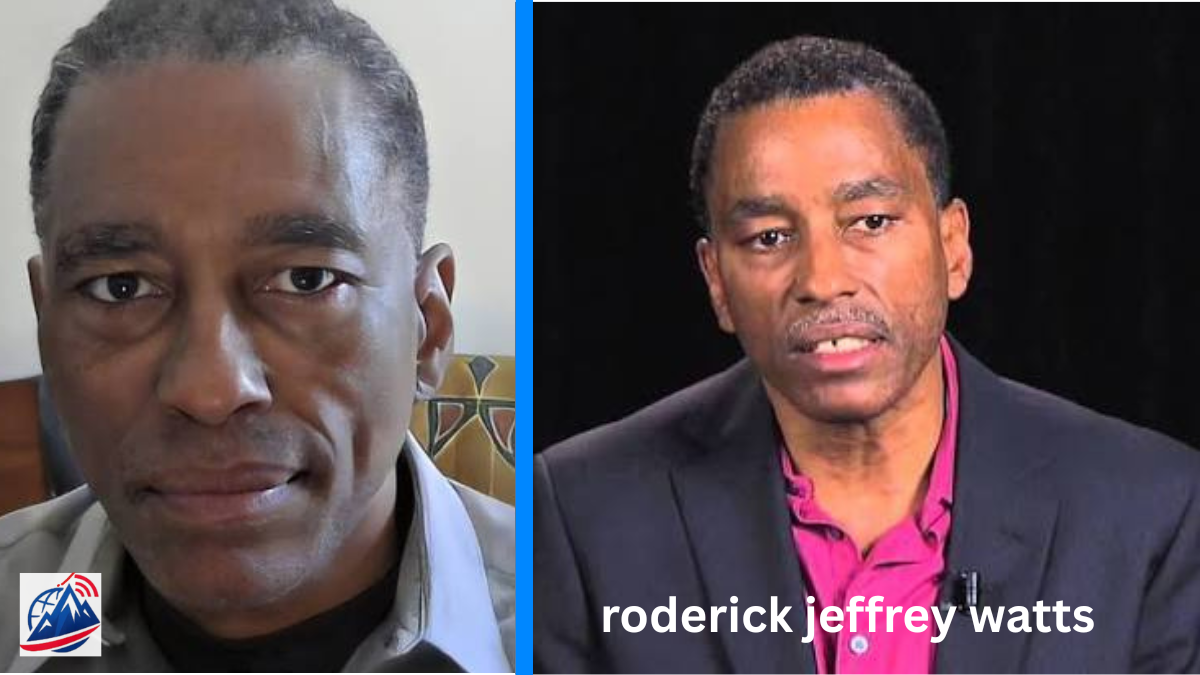
Roderick Jeffrey Watts is a name that often appears in online searches because of his connection to Pulitzer Prize-winning author and journalist Isabel Wilkerson. However, reducing his story to a marriage would miss the more substantial part of his public life. In academic circles, Watts is better known as Roderick J. Watts, a psychologist, educator, researcher, and community psychology scholar whose work has focused on social justice, youth development, identity, civic engagement, and liberation psychology.
The reliable public record around Watts is much stronger when it comes to his professional career than his private life. The CUNY Graduate Center identifies him as Professor Emeritus of Psychology and Africana Studies and lists his research interests as youth sociopolitical development, youth activism, community organising, civic engagement, men’s development, liberation psychology, social identity, and action research methodology.
That makes Roderick Jeffrey Watts an interesting figure to explore. He represents a type of academic whose influence is not necessarily measured by celebrity appearances or a constant media presence. Instead, his impact can be found in research papers, university teaching, community programmes, professional mentorship, and ideas about how psychology can help people understand and challenge the social conditions around them.
Who Is Roderick Jeffrey Watts?
Roderick Jeffrey Watts is primarily known professionally as Roderick J. Watts, a psychologist and academic associated with community psychology. The CUNY Graduate Center lists him as an emeritus professor in Psychology and Africana Studies. His academic training includes a Ph.D. from the University of Maryland, College Park, and his professional work has connected psychology with questions of culture, identity, social power, and community life.
One of the most interesting aspects of Watts’s career is that he did not approach psychology as something limited to an individual’s thoughts or behaviour. His scholarship has consistently considered the larger environment surrounding people. That includes communities, institutions, cultural expectations, racial identity, social inequality, and political participation. This broader perspective is a major reason his work fits naturally within community and liberation psychology.
His name has also become connected online with Isabel Wilkerson, the acclaimed journalist and author of The Warmth of Other Suns and Caste. Public biographical references report that Wilkerson and Watts married in Maryland in 1989. However, his professional record deserves to be considered separately from that relationship. Watts developed a significant academic career of his own, and his research remains the most reliable way to understand his contribution.
Early Life and Education of Roderick Jeffrey Watts
There is surprisingly little verified public information about Watts’s childhood, parents, siblings, exact birth date, or early family circumstances. That is worth pointing out because many biography websites publish detailed claims about his upbringing without providing reliable evidence. A responsible profile should not turn speculation into biography simply to make the story appear more complete.
What is well established is his academic direction. CUNY identifies the University of Maryland, College Park, as the institution where Watts earned his Ph.D. The institution describes his training as being rooted in clinical and community psychology, while Pacifica Graduate Institute identifies his broader training as involving critical social and personality psychology.
That educational foundation helps explain the unusual combination of topics that later appeared throughout his research. Watts became interested not only in psychological development but also in how identity, culture, social conditions, and power influence that development. His work demonstrates a consistent belief that people’s experiences cannot always be understood by looking at individuals in isolation from their communities and social environments.
Roderick Jeffrey Watts and His Academic Career
Watts’s academic career has included several respected institutions. According to the CUNY Graduate Center, he came to the institution from Georgia State University, where he coordinated the joint clinical-community psychology programme. He also served on the faculties of DePaul University and Yale University School of Medicine and was a visiting professor of psychology at Stellenbosch University in South Africa.
His connection with CUNY eventually became one of the defining features of his career. The Graduate Center lists him as Professor Emeritus in Psychology and Africana Studies. The university also identifies teaching interests that include programme evaluation, African American psychology, consultation, and qualitative research methods. These areas reveal how his work moved between academic theory and practical community concerns.
Watts also developed professional interests outside traditional classroom teaching. His public professional profile describes him as a community psychologist and licensed clinical psychologist, with experience involving youth community organising, civic engagement, sociopolitical development, culturally informed mentoring, racial and cultural identity, and men’s development.
His Work in Liberation Psychology and Social Justice
Liberation psychology is central to understanding Roderick Jeffrey Watts’s intellectual contribution. Rather than treating psychological problems solely as individual issues, liberation-oriented approaches ask how social structures, inequality, discrimination, and unequal access to power can affect human development. Watts’s scholarship has repeatedly explored this connection between psychological development and the wider social environment.
In a 2003 article, The Quest for a Liberating Community Psychology, Watts and Irma Serrano-García examined the relationship between community psychology and liberation. The publication appeared in the American Journal of Community Psychology, and its subject matter reflects a major theme of Watts’s career: psychology can become more meaningful when it addresses the social realities affecting communities rather than focusing exclusively on individuals.
This approach also appears in Watts’s work on sociopolitical development. In a 2003 publication with Nat Chioke Williams and Robert J. Jagers, he examined theories and concepts connected with sociopolitical development. In simple terms, this area considers how people develop an understanding of society, power, injustice, and their own potential role in changing the conditions around them.
Roderick Jeffrey Watts and Youth Development
Youth development became one of the strongest themes in Watts’s research. Rather than viewing young people simply as recipients of education or social services, his work has considered them as potential participants in civic and community life. That distinction is important because it changes the conversation from “What can adults do for young people?” to “How can young people develop the knowledge, confidence, and opportunities to shape their own communities?”
CUNY specifically lists youth sociopolitical development and activism, youth community organising, and civic engagement among Watts’s research interests. His work therefore sits at an intersection between psychology and civic life. The focus is not simply on whether young people participate but on how they develop the awareness and social understanding necessary for meaningful participation.
His scholarship also connects youth development with critical consciousness. In a 2011 publication with Matthew A. Diemer and Adam M. Voight, Watts explored critical consciousness and its importance to youth political and civic development. The authors discussed approaches influenced by Paulo Freire and liberation-oriented education, particularly the idea that people can develop a deeper understanding of their social position and the structures affecting their lives.
His Research on African American Men and Identity
Another important part of Watts’s professional work is his research into African American men’s development. CUNY lists men’s development, particularly African American men’s development, among his principal research interests. This topic appears repeatedly throughout his publication record and demonstrates his long-term interest in how identity and social conditions influence development.
Watts’s work in this area goes beyond simple discussions of masculinity. His scholarship has considered the cultural and social environments in which young African American men develop their identities. In one publication, he examined community action through manhood development and explored themes identified by activists working with young African American men.
He also co-authored work on promoting critical consciousness among young African American men. The underlying idea is particularly relevant to Watts’s wider philosophy: young people can benefit from learning to analyse the economic, social, and cultural challenges they encounter rather than being encouraged merely to adapt to them. This connects personal development with community awareness and civic action.
Roderick Jeffrey Watts and Human Diversity
Human diversity is another major thread running through Watts’s scholarship. His 1992 article, Elements of a Psychology of Human Diversity, considered how factors such as race, gender, age, sexual orientation, and other dimensions of diversity could be incorporated into community psychology theory, research, and action. The article explored several perspectives, including population-specific psychology, sociopolitical approaches, cross-cultural psychology, and ecological psychology.
The significance of this work is easy to see today. Modern discussions of psychology frequently recognise that people live within cultural and social contexts, but Watts was working on these questions decades ago. His research encouraged psychologists to think about diversity as something connected to environment and social systems rather than as a collection of isolated demographic categories.
He later co-edited Human Diversity: Perspectives on People in Context with Edison J. Trickett and Dina Birman. CUNY describes the book as providing practical guidelines for diversity-conscious and diversity-sensitive projects and research. That combination of theory and practical application is characteristic of Watts’s overall approach: academic ideas should ideally help professionals understand and work with real communities.
Roderick Jeffrey Watts and Isabel Wilkerson
For many people who search the name Roderick Jeffrey Watts, Isabel Wilkerson is the reason the name appears in the first place. Public biographical references report that Wilkerson married Roderick Jeffrey Watts in Maryland in 1989. At the time, Wilkerson was building the journalism career that would eventually lead to her becoming one of America’s best-known nonfiction writers.
Wilkerson later became the first Black woman to win a Pulitzer Prize in journalism, receiving the feature writing award in 1994. She went on to write The Warmth of Other Suns, a landmark account of the Great Migration, and Caste, a widely discussed examination of social hierarchy and race in the United States. Her professional achievements have naturally brought renewed attention to people connected to her personal history.
Still, it is important not to treat Watts merely as “Isabel Wilkerson’s husband.” His academic career is substantial enough to stand independently. His research interests, university appointments, published scholarship, and contributions to psychology demonstrate that he developed his own professional identity in a field that has little to do with celebrity culture.
What Is Roderick Jeffrey Watts Doing Now?
The most reliable current institutional information identifies Watts as Professor Emeritus at the CUNY Graduate Center. Pacifica Graduate Institute also maintains a faculty profile for Roderick J. Watts and identifies his Ph.D. in psychology from the University of Maryland.
Other professional references indicate that Watts has remained connected to psychology and community work after his full-time academic career. Democracy Moves describes him as a Professor Emeritus of Psychology at CUNY and lists his interests in sociopolitical development, critical consciousness, racial and cultural identity, men’s development, and youth civic engagement.
His public presence remains relatively low-key, especially compared with the amount of attention generated by his association with Isabel Wilkerson. That actually fits the nature of his career. Watts’s influence has largely come through scholarship, teaching, mentorship, research, and community-focused work rather than through a highly visible media profile.
Roderick Jeffrey Watts’s Major Publications and Contributions
Watts’s publication record provides perhaps the clearest evidence of his professional legacy. His work includes research on human diversity, racial identity, professional identity among Black clinical psychology students, community psychology, manhood development, sociopolitical development, critical consciousness, youth civic engagement, and liberation psychology.
Among the works associated with his career are Elements of a Psychology of Human Diversity, The Quest for a Liberating Community Psychology, Sociopolitical Development, and Advancing a Community Psychology of Men. The latter, published in 2010, reviewed themes within the psychology of men and considered how community psychology could contribute to the field.
Another important aspect of his record is the connection between research and action. Watts has been involved with work examining youth organising, community change, critical consciousness, and civic engagement. His career therefore illustrates a broader philosophy: psychological research does not have to remain locked inside academic journals. It can provide concepts and methods that help communities understand their challenges and develop strategies for change.
Roderick Jeffrey Watts’s Legacy in Psychology
The strongest way to understand Watts’s legacy is through the questions he helped bring into psychology. How does a person’s social environment influence development? How do young people learn to recognise injustice? What happens when racial or cultural identity becomes part of psychological development? How can community psychology address oppression rather than merely helping people cope with its consequences?
These questions remain highly relevant. Youth civic participation, racial identity, community wellbeing, social inequality, and psychological empowerment continue to be major subjects of research and public discussion. Watts’s work offers a framework for thinking about these subjects as connected rather than separate issues.
His legacy is therefore less about fame and more about intellectual direction. A scholar does not necessarily need to become a household name to influence a field. By contributing research, teaching students, mentoring professionals, and developing ideas that others continue to study, Watts has helped establish a body of work that remains useful to psychologists, educators, community organisers, and researchers.
Roderick Jeffrey Watts: Net Worth, Age, Family, and Other FAQs
What is Roderick Jeffrey Watts’s net worth?
There is no reliable, publicly verified figure for Roderick Jeffrey Watts’s net worth. Although some biography websites publish estimated figures, those numbers are generally not supported by financial records or credible documentation. It is therefore better to avoid presenting a specific amount as fact.
His professional career has included university positions, research, writing, consulting, and psychology-related work, but professional accomplishments do not automatically reveal a person’s private finances. Any exact net worth figure found online should be treated as an estimate rather than established information.
How old is Roderick Jeffrey Watts?
Watts’s exact date of birth and age are not clearly established in the strongest institutional sources reviewed for this biography. CUNY’s official profile focuses on his education, career, research interests, and professional achievements rather than personal birth information.
For that reason, it would be misleading to give a precise age without a dependable source. The safest approach is to rely on documented milestones in his academic career rather than speculate about his birth year.
Was Roderick Jeffrey Watts married to Isabel Wilkerson?
Public biographical references report that Roderick Jeffrey Watts and Isabel Wilkerson married in Maryland in 1989. Their relationship is one reason Watts’s name receives attention outside academic circles. However, his professional identity is separate from Wilkerson’s career and includes decades of work in psychology, education, community development, and social justice research.
Does Roderick Jeffrey Watts have children?
There is no sufficiently reliable public information confirming whether Watts has children. His academic biographies and institutional profiles do not provide a detailed account of his family life, so claims about children should not be presented as fact without stronger documentation.
This is a good example of why celebrity-adjacent biographies need careful research. The public may be curious about personal details, but the available evidence is much stronger around Watts’s professional life than his private family circumstances.
Where did Roderick Jeffrey Watts work?
Watts has had an extensive academic career. CUNY states that he came to the Graduate Center from Georgia State University, where he coordinated the joint clinical-community psychology programme. His career also included faculty positions at DePaul University and Yale University School of Medicine, along with a visiting professorship at Stellenbosch University in South Africa.
He is currently identified by CUNY as Professor Emeritus of Psychology and Africana Studies. Pacifica Graduate Institute also lists him as a psychology professor, while other professional references continue to associate him with community psychology and social justice-oriented scholarship.
Final Thoughts on Roderick Jeffrey Watts
Roderick Jeffrey Watts may have entered the public conversation for many readers because of his reported marriage to Isabel Wilkerson, but that is only one small part of his story. The stronger and more meaningful record is that of a psychologist and academic who spent decades exploring identity, community, social justice, youth development, civic engagement, and liberation psychology.
His work is particularly notable because it refuses to separate people from the environments in which they live. Watts’s research asks readers to think about how communities, institutions, culture, race, identity, and power influence psychological development. That perspective has helped make his scholarship relevant well beyond traditional psychology departments.
Ultimately, the story of Roderick Jeffrey Watts is a reminder that influence does not always come with celebrity status. His name may be searched because of a famous former relationship, but his lasting contribution comes from his own work. Through teaching, research, publications, community engagement, and scholarship on social and psychological development, Watts established a professional legacy that deserves to be considered on its own terms.
You May Also Read:Harlow Olivia Calliope Jane Movies: 5 Notable Projects and Her Rising Acting Career
for more visit newspeaka.co.uk
